How to Spot a Wire Edge Before It Wrecks Your Cutting Performance
You've spent an hour on stones. Your knife shaves hair. But it still squishes tomatoes. That's the wire edge, baby. It's a feather-thin flap of steel hanging on for dear life, making your edge inspection results look like a total lie. It feels scary sharp because it is—temporarily. Until it folds over after three cuts. Then your cutting performance drops off a cliff and you're wondering what went wrong. Don't blame the steel. Blame the burr you never noticed.
The "Thumbnail Test" and Other Street-Smart Checks
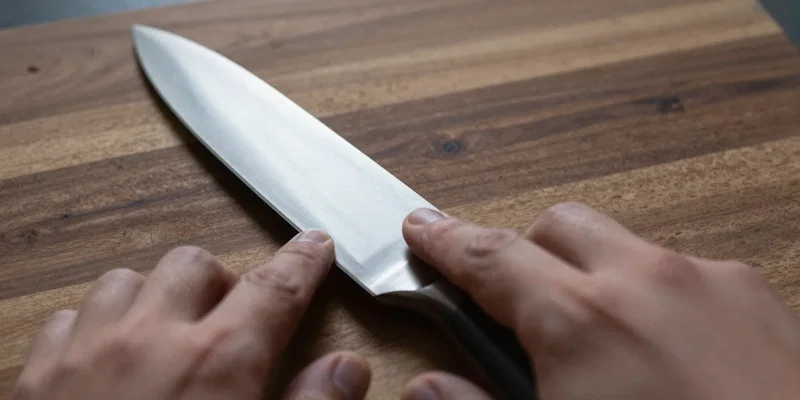
Forget microscopes. You don't need lab gear. Run your thumbnail sideways across the edge. If it catches or skips in one direction but slides the other way, congratulations, you've found a wire edge. Another dead giveaway? Grab a tomato. A real edge bites instantly. A wire edge? It skates across the skin like a hockey puck until you put your shoulder into it. You can also use the old phonebook paper test. Clean slices mean you're golden. Ragged, torn edges mean that flap of steel is doing the cutting. Not good.
Your Sharpening Routine Is Creating the Problem
Here's the thing. Most people chase a burr like it's a badge of honor. They grind one side until it flips over, then grind the other, and then they stop. But they never actually knock the thing off. High pressure on fine stones makes it worse. You're just polishing a burr into a thinner, sneakier burr. Sharpening diagnosis 101: if your edge feels sharp but dies in minutes, you didn't finish the job. Lighten up. Drop the pressure. Do some edge-leading strokes at the end. Actually finish.
How to Kill the Wire Edge for Good
So you've got one. Now what? Don't panic. A few light edge-leading strokes on your highest grit stone usually do the trick. No higher grit? Use a leather strop with some compound. Or honestly, cut into a cork. Or a potato. Sounds insane, but it works. The soft material grabs that flap of steel and rips it away. After that, your cutting performance actually matches your expectations. The knife glides instead of fights. And you realize how much time you've wasted blaming your technique.
Stop Obsessing and Start Maintaining
You don't need a mirror polish to slice an onion. You need a clean apex. That's it. Check your edge every few sharpening sessions. Don't let the wire edge become your default setting. A quick strop between uses keeps the geometry honest. Touch up the micro-bevel when things get lazy. But don't turn your kitchen into a sharpening dojo. Sharpening diagnosis isn't about perfection. It's about knowing when your edge is real versus when it's putting on a show. Trust your cuts. That's the only inspection that matters.