The Real Monthly Cost of Owning a Scooter (Beyond the Sticker Price)
You've spotted the perfect scooter and the price tag looks sweet. But is it really cheaper than taking the LRT? Many new riders forget the ongoing costs that can add up to more than the monthly installment. This article breaks down every ringgit you'll spend, so you know exactly what you're signing up for.
The True Purchase Price: Beyond the Advertised Figure
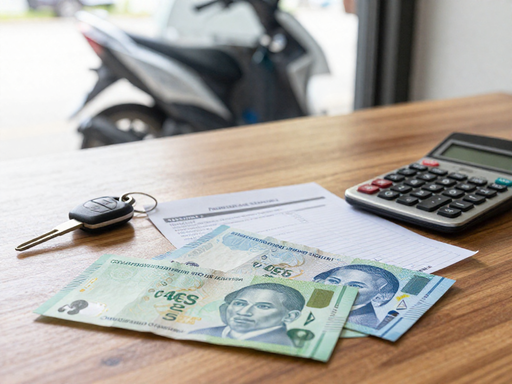
When you see a scooter advertised for, say, RM7,000, that figure usually doesn’t reflect what you’ll actually pay to ride it home. The real cost is the on-the-road (OTR) price, which bundles in several mandatory fees and taxes. Understanding these extras helps you budget accurately and avoid last-minute surprises at the dealership.
Here’s a closer look at what typically adds to the sticker price:
- JPJ registration fee: The Road Transport Department charges a fee to register your new machine. For a scooter under 150cc, it’s often around RM150–RM350, but larger engines or higher-spec models may push it higher.
- Number plate fee: A standard running number costs RM50, but if you want a special or bidded plate (e.g., a popular single-digit or repeating number), prices can soar into the hundreds or even thousands. This is a common “style” expense many riders overlook.
- Dealer handling / administration charges: Shops aren’t charities—they charge for processing paperwork, preparing the bike, and sometimes a transport fee from the distributor. This can range from RM100 to RM500 depending on the outlet.
- Sales and Service Tax (SST): Motorcycles are subject to SST (currently 10% for most bikes), calculated on the base price plus any manufacturer add-ons. Some dealers quote an OTR price that already includes SST, but always confirm.
As a concrete example, let’s take the popular Yamaha NVX 155. The advertised price might show around RM9,500, but a typical OTR breakdown looks like this:
- Base price: RM9,500
- SST (10% on base): RM950
- JPJ registration: RM350
- Standard number plate: RM50
- Dealer handling: RM200
- Total OTR: RM11,050
That’s over RM1,500 more than the headline number! Insurance (discussed in the next section) will add further cost. So before you sign, ask for a detailed quotation that itemises every charge—and don’t be shy about comparing OTR quotes between dealers, because handling fees can vary. A little diligence now means a smoother ride later, without the financial pinch.
Monthly Financing: Installments That Linger
Most scooter buyers in Malaysia opt for hire purchase financing, which spreads the cost over time but adds a consistent monthly commitment. Understanding how these loans work will help you budget accurately.
The typical downpayment ranges from 10% to 20% of the bike's on-the-road price. For example, on a RM8,000 scooter, a 10% downpayment means you pay RM800 upfront, leaving RM7,200 to be financed. Some promotions may offer zero downpayment, but these often come with higher total interest.
Loan tenures usually run from 1 to 5 years. Shorter tenures mean higher monthly payments but less total interest; longer tenures ease monthly cash flow but increase overall cost. The interest rate applied is a flat rate, commonly between 4% and 6% per annum. Unlike reducing-balance loans, flat-rate interest is calculated on the full loan amount for the entire tenure.
To illustrate: Financing RM7,200 at a flat 5% per annum over 3 years. Total interest = RM7,200 × 5% × 3 = RM1,080. The full amount repayable is RM7,200 + RM1,080 = RM8,280. Divided by 36 months, your monthly installment is RM230. (Always confirm with your dealer or bank as rates and calculations vary.)
Comparing cash purchase versus loan: Paying cash avoids interest altogether, saving you that RM1,080 in the example. However, not everyone has the full amount ready, and a loan spreads the burden. Just be aware that the “affordable” monthly figure masks the extra cost over time.
One common pitfall is early settlement penalties. If you decide to pay off your loan early, many hire purchase agreements include a penalty (often a flat fee or a percentage of remaining interest). Before signing, ask about the settlement terms and penalty structure—this can affect refinancing or selling the bike before the loan ends.
By factoring in these realistic financing details, you'll have a clearer picture of the monthly outlay and the long-term cost of your scooter.
Insurance & Road Tax: The Mandatory Recurring Costs
Once your scooter is paid for (or while you’re still paying), two unavoidable yearly bills land on your plate: insurance and road tax. Both are non-negotiable for legal riding in Malaysia.
Choosing Your Insurance Coverage
Motorcycle insurance falls into two main categories: - Third-party: Covers injury or damage you cause to others. It’s the legal minimum, and the most affordable. - Comprehensive: Adds coverage for your own machine against theft, fire, or accidental damage. Worth considering if your scooter is new or high-value.
For popular models like the Yamaha NVX 155 or Honda Vario 150, annual third-party premiums often range from RM50 to RM100, while comprehensive plans can run RM200 to RM400 or more, depending on your profile. New riders under 25 without riding history may see higher rates, but building a No-Claim Discount (NCD) — up to 25% for motorcycles — can significantly lower costs over time.
Road Tax: A Tiny but Vital Sum
Road tax is refreshingly straightforward: it scales with engine capacity. For most scooters: - Up to 150cc: RM2 per year - 151cc–200cc: RM30 - 201cc–250cc: RM50 - 251cc–500cc: RM80 - Above 500cc: RM90
So if you’re commuting on a 125cc kapcai, you’re looking at just RM2 annually. Stepping up to a 250cc scooter? Budget RM50.
Monthly Equivalent
To spread the hit, divide your annual insurance and road tax total by 12. A realistic example: RM100 insurance + RM2 road tax = RM102/year, or about RM8.50/month. Even a comprehensive setup — RM350 insurance + RM30 road tax — works out to only around RM32/month. Tuck that into your transportation budget, and you’ll never be caught off guard when renewal time comes.
Takaful: An Alternative for Muslim Riders
For riders who prefer a Shariah-compliant option, many insurers offer general takaful for motorcycles. It operates on a mutual guarantee model, with contributions paid into a fund. Coverage and pricing are comparable to conventional insurance, so you can meet your religious principles without sacrificing protection.
Fuel Efficiency: The Daily Commute's Real Cost
One of the biggest advantages of a scooter is its incredible fuel efficiency. Modern scooters typically consume between 45 to 55 km per litre, depending on the model, riding style, and traffic conditions. For a typical Malaysian commuter covering a 30 km round trip to work, that’s less than a litre of fuel each day.
With RON95 priced at RM2.05 per litre, here’s how the monthly fuel bill stacks up:
- Daily fuel use: 30 km ÷ 50 km/l (midpoint) = 0.6 litres
- Daily cost: 0.6 litres × RM2.05 = RM1.23
- Monthly working days (22 days): RM1.23 × 22 ≈ RM27.06
That’s around RM30 a month – roughly the cost of a single meal at a café. Even if you factor in occasional weekend rides or errands, the bill rarely exceeds RM50.
Keep in mind that stop-go traffic can eat into these numbers. Prolonged idling and frequent acceleration may reduce your scooter’s efficiency, especially in congested areas like the Klang Valley. Still, even in heavy traffic, most scooters remain far more economical than a car for the same commute.
Routine Maintenance: Keeping It Roadworthy
A scooter’s monthly budget must account for regular upkeep — not just the occasional oil change. In Malaysia, most manufacturers recommend a service every 3,000 to 5,000 km, and sticking to the schedule keeps your warranty intact and your ride safe.
Typical service items and intervals - Engine oil (every service): RM30–50 for quality 10W-40 or 10W-30 four‑stroke oil, plus a few ringgit for the drain-plug washer. - Gear oil (final drive): Change every other service or once a year; a tube costs about RM15–25. - Air filter: Clean or replace every 12,000–15,000 km; a stock paper filter is RM20–40, while a washable aftermarket unit may cost more upfront but saves later. - Spark plug: Usually replaced every 10,000–12,000 km at RM10–20. - CVT belt and rollers: This is the bigger‑ticket item. The belt and roller weights wear together and should be swapped every 20,000–25,000 km (sooner if you ride aggressively or carry heavy loads). A complete original‑grade set runs RM150–300, depending on market and model. - Tires: Scooter tires last roughly 15,000–20,000 km. A pair of reputable tubeless tires, mounted and balanced, costs RM200–400. Factor in replacement every two to three years for a typical commuter. - Brake pads: Front pads wear faster; a set of sintered pads is around RM40–80 and may need replacing by 15,000 km. Drum‑brake shoes last longer and are cheaper.
The monthly math
Totalling up these common expenses for a scooter covering 12,000–15,000 km a year, annual maintenance usually falls between RM300 and RM600. That breaks down to a manageable RM25–50 every month — about the price of a couple of café lattes. The exact figure depends on your riding style, the routes you take, and whether you can handle basic tasks like oil changes yourself.
Always refer to your owner’s manual for the exact schedule, and keep a small diary of what’s been done. Catching wear early saves the cost and hassle of a breakdown — and keeps your scooter a worry‑free companion on Malaysia’s roads.
Parking & Tolls: The Hidden Urban Costs
When you commute on a scooter in Kuala Lumpur or any Malaysian city, parking and tolls become a daily reality that can quietly chip away at your budget. While motorcycle rates are lower than cars, they still add up.
In most shopping malls and commercial buildings, motorcycle parking costs between RM1 and RM3 per entry. Some places still offer the first hour free or flat daily rates, but not always. If your office doesn’t provide free parking, you might also need a season pass, typically RM20–RM50 per month depending on the location and facility.
Tolls are another line item, but here bikes get a big break. On many Malaysian highways, tolls for motorcycles are heavily reduced or completely waived. Where charges do apply—such as the Penang Bridge or certain stretches of the LDP—the amount is often just RM1–RM2 per crossing. For most daily commuters, toll costs remain minimal compared to cars.
A realistic monthly estimate for urban parking and tolls sits around RM30–RM60. This assumes mainly mall or office parking and the occasional tolled highway. By keeping a Touch ‘n Go card topped up and looking for free bike bays, you can keep these hidden costs well under control.
Accessories & Gear: Essentials vs. Nice-to-Haves
Before your scooter even leaves the showroom, you’ll need to gear up—and that’s a recurring cost many new riders overlook. In Malaysia’s heat and sudden downpours, the right accessories aren’t just for comfort; they’re for safety and practicality.
The non-negotiables start with a quality helmet. A certified full-face or open-face helmet costs between RM150–300, depending on brand and features. Don’t skimp here: a helmet is your primary protection. Next is a raincoat—not the flimsy disposable kind, but a durable two-piece suit that can handle tropical storms. Budget RM50–100. Gloves, often forgotten, shield your hands from sun, vibration, and minor spills. A decent pair runs RM30–80.
Together, this essential trio will set you back about RM300–500 upfront. But these aren’t permanent. Helmets should be replaced every 3 to 5 years (or after any impact) as the inner foam degrades. Raincoats wear out in roughly 2 years of daily use, especially with frequent fold-and-pack routines. Gloves, if leather or mesh, might last a year or two before seams fray.
Nice-to-haves quickly become everyday habits. A phone mount (RM30–80) lets you navigate without fumbling, but only use it when stationary—distracted riding is illegal and dangerous. A top box (RM80–200 fitted) transforms your scooter’s practicality, swallowing a helmet, groceries, or a laptop bag. USB chargers (RM20–50) keep your devices alive on the go, though professional installation is wise to avoid battery drain.
When you spread the initial essential gear cost over a realistic replacement cycle, the monthly hit is just RM10–20. Factor in a top box or phone mount, and you might add another RM5–10 per month. It’s a small sum that pays off every time you ride through a storm or stow your helmet securely. Prioritize what keeps you safe and dry first; the gadgets can wait.
Unexpected Costs: Repairs, Fines, and More
Even with careful planning, a scooter’s monthly budget must leave room for the unpredictable. When your ride slips out of warranty, repairs become your responsibility—and scooters have a few weak spots. The continuously variable transmission (CVT) belt, rollers, and clutch wear down with our start-stop traffic, often needing replacement between 20,000 and 30,000 km. Electrical gremlins, like a failing rectifier or starter relay, can also strike without warning. A sudden repair bill of RM200–500 can throw off your budget if you aren’t ready.
Traffic summons are another unwelcome surprise. Common offences like riding without a valid license, running a red light, or illegal parking can see you fined anywhere from RM50 to RM300 per offence. Enforcement by Polis Diraja Malaysia and local councils is regular, especially in the Klang Valley. Few things sting more than receiving a DBKL or MBPP parking compound for RM30–100 because you nudged over a parking box line or forgot to display a coupon.
To soften these blows, set aside a small buffer each month. Tucking away as little as RM50 monthly builds a cushion that turns a panic into a minor inconvenience. Think of it as self-insurance—paying yourself first to keep your scooter life stress-free.
The Big Picture: Summarizing Your Monthly Scooter Budget
To see the full financial picture, here’s a consolidated look at what you can expect to spend each month on your scooter, based on a typical 150cc model used for daily commuting in Malaysian cities. These are realistic low and high estimates that account for different riding styles, maintenance choices, and unexpected events.
| Cost Category | Low Estimate (RM) | High Estimate (RM) |
|---|---|---|
| Financing (if applicable) | 0 | 250 |
| Insurance & Road Tax | 15 | 30 |
| Fuel | 40 | 80 |
| Routine Maintenance | 20 | 60 |
| Parking & Tolls | 10 | 40 |
| Accessories & Gear (amortized) | 10 | 50 |
| Unexpected Costs (repairs/fines) | 5 | 40 |
| Total | RM100 | RM550 |
For most riders, the sweet spot falls between RM300 and RM700 per month, depending on how you finance, how far you ride, and how much you invest in gear and servicing. A cash-purchased scooter with minimal commuting can dip below RM200, while a fully financed maxi-scooter with premium accessories can push closer to RM700.
How Does This Compare? - Car ownership in Malaysia easily runs RM1,000 to RM1,500 per month when you factor in higher fuel, maintenance, tolls, insurance, and depreciation. - Public transport for a daily commuter might cost RM200 to RM300, but door-to-door travel time is often much longer and less flexible.
Is a Scooter Truly Economical? A scooter makes strong financial sense if: - You travel solo most of the time and don’t need to carry large loads. - Your daily round trip is under 40 km, keeping fuel and wear low. - You can buy the scooter outright or with a small down payment to avoid high interest. - You stick to essential gear and basic maintenance.
However, if you already own a car and only ride occasionally, the extra registration, insurance, and upkeep might tip the balance. For pure savings, compare your expected scooter costs against your current transport spending and see if the gap is worth the convenience.
Before you make a final decision, grab our free scooter budgeting checklist to run your own numbers with local prices. It’s the simplest way to avoid surprises and ride confidently within your means.
FAQ
Is it cheaper to own a scooter than a car in Malaysia?
Yes, owning a scooter is significantly cheaper than a car. You’ll spend far less on fuel, road tax, insurance, and maintenance. Parking is often free or minimal, making it ideal for daily commuting.
How much is scooter insurance per year in Malaysia?
Annual insurance for a scooter typically ranges from around RM100 to RM500, depending on engine size and coverage level. Basic third-party plans are very affordable, while comprehensive coverage costs more but offers better protection.
Do I need a special license for a scooter?
Yes, you need a motorcycle license. For most scooters under 250cc, a B2 license is required, while larger machines require a B Full license. You must pass a riding test at a driving institute.
Can I pay road tax monthly instead of yearly?
Road tax for scooters in Malaysia is generally paid yearly. You can renew for 6 or 12 months, but monthly payments are not available. The annual cost is very low, usually under RM50 for small-capacity engines.
What is the most fuel-efficient scooter in Malaysia?
Many 125cc to 150cc scooters deliver outstanding fuel economy, often exceeding 40 km/L. Models like the Yamaha NVX and Honda Vario are popular choices. Actual efficiency depends on riding style and maintenance, but you can expect to spend very little on petrol.
Are there any hidden charges when buying a scooter from a dealer?
Yes, dealers often charge additional fees beyond the on-road price. These may include registration, road tax, insurance, number plate, and handling charges. Always ask for a detailed breakdown to avoid surprises.