Balcony Watering Hacks for Hot Summer Days
When a heatwave hits, your balcony garden can quickly turn from a lush escape to a crispy disaster. But with busy urban schedules, who has time to water twice a day? The secret is working smarter, not harder. These balcony-specific hacks will help you keep your container plants hydrated, healthy, and blooming all summer long—without sacrificing your mornings or weekend getaways.
Water at the Right Time
On hot summer days, when the sun beats down on your balcony and pots dry out in hours, timing is everything. Watering early in the morning—ideally before 9 a.m.—gives your plants a deep drink while temperatures are still cool. This allows water to soak deep into the root zone, building a moisture reserve that lasts through the midday heat. It also minimizes evaporation, so more water goes to your plants, not into the air.
If you water later in the day, much of it can evaporate before it ever reaches the roots, and drops on leaves can act like tiny magnifying glasses under intense sun, causing leaf burn. Evening watering might seem tempting, but on a balcony where nights are often humid, damp foliage left overnight invites fungal diseases like powdery mildew. Stick to mornings whenever possible, and you'll sidestep these common pitfalls.
How you water matters just as much as when. Use a watering wand or a narrow-spout can to direct water right at the soil surface, not over the leaves. Wet leaves waste water and can scorch or disease. Keep the flow gentle to avoid washing away soil or splashing pathogens onto stems.
Before you water, do a quick finger test: push your finger into the top inch of soil. If it feels dry, it's time to water; if still moist, hold off. Balcony plants often need daily watering in summer, but a soggy pot is just as stressful as a dry one. With these simple habits, you'll help your garden thrive through every heat wave.
DIY Self-Watering Systems
When balcony gardening meets a summer heat wave, daily watering can become a chore—especially if you’re planning a weekend away. That’s where DIY self-watering systems shine. They’re low-cost, space-friendly, and surprisingly simple to set up using items you probably already have at home.
Wine Bottle Slow-Release Waterers
Grab an empty wine bottle, fill it with water, and quickly invert it into the soil of a planter. The neck acts like a valve: soil plugs the opening just enough to let water seep out slowly, giving your plants a steady drink for several days. This works best for larger containers and thirsty plants like tomatoes or basil. Pro tip: if you’re worried about the bottle tipping, secure it to a bamboo stake with a twist tie.
Bucket-and-Rope Wicking
For a more hands-off approach, try a wicking system. Place a reservoir (a bucket or large bowl) filled with water next to or below your pots. Dangle a strip of natural cotton rope from the reservoir into the soil—one end deep in the water, the other buried a few inches into the pot. Water travels up the rope through capillary action, moistening the roots as needed. This method is perfect for multiple small pots grouped together and can keep them happy for up to a week.
Upcycled Plastic Bottle Drippers
Transform a soda bottle into a drip irrigator. Poke a few tiny holes in the cap with a heated needle, fill the bottle with water, screw the cap back on, and bury the bottle upside down in the soil. The water seeps out gradually, targeting the root zone. For an even slower release, remove the cap entirely and plug the opening with a piece of cotton cloth before inserting. This hack is ideal for individual pots and takes up no extra space on your balcony.
When DIY Isn’t Your Style
If crafting isn’t your thing, store-bought self-watering planters are a great investment. These have built-in water reservoirs and a wicking platform, so you only need to refill the tank every few days. Look for slim, vertical models designed for railings to maximize your small balcony footprint. They come in a range of styles and colors, blending function with the aesthetic you’ve already built.
Each of these systems reduces the daily watering sprint, giving you more time to enjoy your garden—and peace of mind when you’re away. Start with one pot as a test, adjust the setup to your plant’s drinking speed, and soon you’ll have a worry-free, self-sustaining balcony oasis.
Mulch Your Containers
A simple layer of mulch on top of your container soil can make a dramatic difference during hot summer days, acting like a cozy blanket that shields the soil from direct sun and drying winds. It slows down evaporation, so your plants stay hydrated longer and you can water less often—perfect for busy urban gardeners.
Spread a 1–2 inch layer of natural mulch evenly over the soil surface, keeping it an inch away from plant stems to prevent rot and pests. Straw, shredded bark, or coconut coir are lightweight options that work beautifully on balconies and break down slowly, adding a bit of organic matter to the soil over time.
If you want to add a touch of style, try decorative pebbles, marble chips, or even sea glass. They not only keep the soil cool and moist but also give your containers a polished, modern look. Just remember that inorganic mulches don’t improve soil, so you might need to top-dress with compost occasionally.
You can also get creative with household items. Broken terracotta pot pieces laid on the soil create a partial barrier while adding a rustic charm. Even a layer of coffee filters placed on the surface before adding mulch can help retain moisture and suppress weeds. Just be sure any reused materials are non-toxic and won’t harm your plants.
Finally, monitor your mulch layer and replenish it as it decomposes or shifts—especially after heavy watering. In a small space, this quick task can keep your balcony garden thriving all summer long.
Water-Saving Tools for Small Spaces
Even on the tiniest balcony, the right tools can turn watering from a splashy chore into a quick, precise ritual that conserves every drop. Start by swapping your basic watering can for a hose nozzle with a built-in shut-off valve. This lets you dial in a gentle shower for delicate herbs or a focused stream to reach those back corners without drenching the railing. The instant shut-off means no wasted water between plants—perfect when you’re moving from pot to pot in tight quarters.
For a truly hands-free setup, consider a drip irrigation kit made especially for containers. Many are surprisingly affordable and battery-operated, with programmable timers that water your plants even when you’re out enjoying the summer. You can run slim tubing along your balcony rail or weave it through planters, delivering moisture directly to the roots where it’s needed most.
To avoid overwatering (a common balcony gardening pitfall), pair your tools with a simple moisture meter. Just poke the probe into the soil and you’ll know instantly if it’s time to water—or if yesterday’s heat wave didn’t dry things out as much as you thought. No more guessing, no more root rot.
And if you’re into clever, low-cost solutions, grab an empty plastic milk jug. Rinse it well, use a thumbtack to punch small holes in the lid, and you’ve got a gentle sprinkle that’s ideal for seedlings or delicate blooms. The slim handle fits on crowded shelf edges, and you’re recycling something that might otherwise head to the landfill. With these small-space tools, you’ll keep your balcony lush all summer while being kind to your water bill and the planet.
Group Plants to Boost Humidity
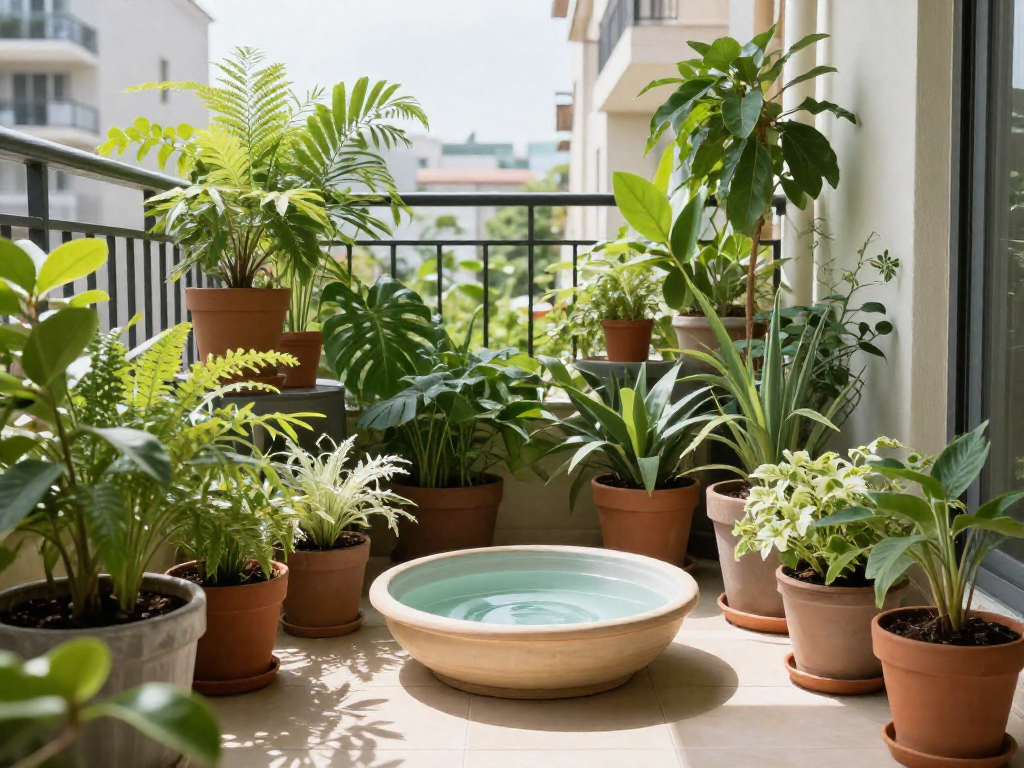
When your balcony feels like a baking tray, grouping containers together is one of the simplest ways to help your plants hold onto moisture. Clustered pots create a cozy microclimate: the collective foliage shades the soil from the sun, and the natural process of transpiration—where plants release water vapor through their leaves—raises the humidity right around your little oasis. This cuts down on evaporation and helps delicate plants thrive even through a heatwave.
To make this work for you, try these easy steps:
- Set pots close together so the leaves overlap slightly and the soil surfaces are well-shaded. This reduces the amount of water lost from sun and wind.
- Put larger, leafy plants on the outside of the group to act as a living shield. A banana plant, a tall fern, or a bushy tomato can protect smaller, more sensitive plants like lettuce or herbs.
- Slide a shallow tray of water into the middle of the cluster. As it slowly evaporates, it gently humidifies the surrounding air—like a mini swamp cooler for your plants.
- Rotate pot positions every few days so all sides get equal sun, but keep the cluster intact. This prevents one plant from hogging all the light while maintaining the group’s protective benefits.
This simple rearrangement is a low-effort way to stretch your watering schedule and keep your balcony garden looking lush, even when the heat is on. Give it a try on your next scorching weekend.
Harvest and Reuse Water
Harvesting and reusing water on your balcony is a simple way to lower your utility bills while giving your plants a chemical-free drink. With a little creativity, you can collect free water from sources you might otherwise overlook.
Catch Rainwater – Even the tiniest balcony can accommodate a foldable rain barrel or a compact tarp system hooked onto the railing. Rainwater is soft and free of the chlorine and fluoride often found in tap water, making it ideal for your plants. Position a bucket under the tarp’s low corner and watch it fill during a summer storm.
Collect Air Conditioner Condensate – If your balcony houses an AC unit, the condensation it produces is essentially distilled water and completely safe for plants. Place a clean bucket under the drip line, and you’ll be surprised by how much water accumulates—especially on humid days.
Repurpose Cooking Water – After steaming vegetables or boiling pasta, let the water cool completely, then use it to hydrate your containers. This water is enriched with nutrients like starch and minerals, but be sure to avoid any water that has been salted, as salt can damage roots.
Save Shower Warm-up Water – Instead of letting the cold water run down the drain while you wait for the shower to heat up, catch it in a bucket. That clean, untreated water is perfect for your balcony garden, and over the course of a week, you’ll collect gallons of it.
These small habits not only conserve water but also nurture your plants with natural resources right at home.
FAQ
How often should I water my balcony plants during a heatwave?
During a heatwave, most balcony plants need watering once or even twice a day, ideally early morning and late evening to reduce evaporation. Check the soil by sticking your finger an inch deep; if it feels dry, it's time to water. Container plants dry out faster than garden beds, so adjust based on plant type and pot size.
Can I use ice cubes to water my container plants?
Yes, ice cubes can be a gentle way to water small pots or delicate plants like orchids, as they melt slowly and reduce runoff. However, for larger containers, they may not provide enough moisture, and the cold can shock some roots. Use them sparingly and only for plants that prefer consistent moisture.
What are the best self-watering containers for small balconies?
Look for compact self-watering planters with a water reservoir at the bottom and a wicking system, such as the Lechuza Cube or EarthBox Junior, which are space-efficient. Hanging self-watering baskets and railing planters with built-in reservoirs also work well. These help maintain even moisture, reducing the need for daily watering.
Is it safe to water plants with air conditioner water?
AC condensate is essentially distilled water and safe for most plants, as it's free of chlorine and minerals. However, avoid using it on edible plants if the AC unit has been treated with chemicals or isn't clean. Always collect it in a clean container and use it promptly to prevent stagnation.
How do I know if I'm overwatering my balcony garden?
Signs of overwatering include yellowing leaves, wilting despite moist soil, mold on the soil surface, or a foul smell from the pot. Check by feeling the soil: if it's constantly soggy and the pot feels heavy, you're likely watering too much. Ensure pots have drainage holes and empty saucers after watering.