Watering Balcony Plants in Summer: How Often and When to Water
Summer heat turns your balcony into a plant sauna. Learn the no-guesswork watering routine that keeps container plants thriving through even the hottest afternoons.
Why Summer Watering is Different for Container Plants
Watering your balcony plants in summer isn't just about adding more water to your routine—it's about understanding why containers behave so differently than garden beds. When you grow in pots, you're working with a small, isolated environment that reacts quickly to heat and sun.
Potted plants dry out much faster than those in the ground because the soil volume is limited and the sides of the container are exposed to warm air. Unlike in-ground soil, which stays cooler and draws moisture from deeper layers, balcony containers can heat up quickly, speeding evaporation. High summer temperatures also cause plants to transpire more—that's the process where they lose water through their leaves to stay cool. So your lush basil or petunias are sweating just like you, and they need to replenish that moisture.
On a balcony, wind adds another layer of challenge. Even a light breeze wicks moisture away from both the soil surface and the foliage, making containers dry out surprisingly fast. And if your pots are dark-colored or made of materials like plastic or metal, they can absorb a lot of heat, which not only bakes the soil but can also overheat delicate roots. This stress makes plants thirstier and more vulnerable to wilting. Recognizing these factors is the first step toward creating a watering schedule that keeps your balcony garden thriving all summer long.
How Often Should You Water? Factors and a Flexible Schedule
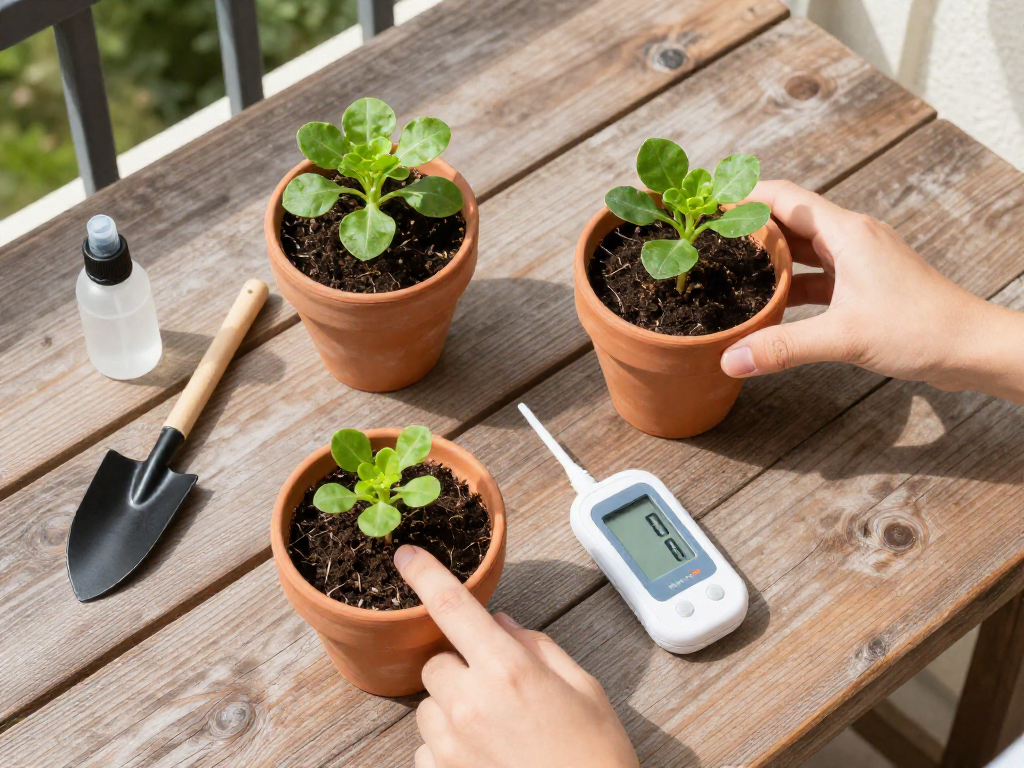
Instead of locking yourself into a rigid calendar schedule, think of watering as a daily check-in with your plants. The most reliable rule is simple: stick your finger into the soil up to the second knuckle. If the top 1–2 inches feel dry, it’s time to water. If it still feels cool and damp, wait another half day and test again.
Why not just water every morning? Because how fast your soil dries out depends on a handful of shifting factors that make a fixed schedule unreliable.
Pot size and material play a huge role. Small pots hold less soil and dry out much faster than large ones. Unglazed terracotta wicks moisture right through its walls, so a 6-inch terracotta pot might need watering twice a day in a heatwave. Plastic, glazed ceramic, or self-watering containers retain moisture longer, often stretching the interval to a day or two.
Plant type matters just as much. Succulents and cacti store water in their leaves and stems, so they prefer the soil to dry out completely between waterings—overwatering can rot them. Leafy greens, herbs like basil, and thirsty flowering annuals, on the other hand, will wilt dramatically if they stay dry too long. Learn the signals your plants give you: drooping leaves, dull color, or crispy edges often mean they’re thirsty.
Sun and temperature are the wildcards. A balcony that bakes in full afternoon sun can see soil temperatures spike, evaporating moisture in hours. The same pots on a shaded balcony might go two days without drying out. Hot, dry, or windy weather speeds up water loss through leaves as well as soil, so expect to water more often during heat waves.
To put it all together, here’s a flexible way to think about frequency:
- Small terracotta pots in full sun: check morning and late afternoon; they may need water both times.
- Medium plastic or glazed pots in partial sun: check daily; water when the top couple of inches are dry, roughly every 1–2 days.
- Large self-watering planters or deep raised beds on a shaded balcony: check every other day; they might only need a thorough soaking every 2–3 days.
The key is to rely on your senses, not the date. Use the finger test or an inexpensive moisture meter to probe deeper into larger pots. Over time, you’ll start to feel the rhythm of your own balcony’s microclimate. If you forget a day and find a plant wilting, don’t panic—most bounce back quickly after a deep drink. This flexible, observant approach builds your confidence and helps you water exactly when your plants need it, not a moment too soon or too late.
Best Time of Day to Water Balcony Plants
Timing your watering just right makes a huge difference in how well your balcony plants thrive during summer. When you water at the optimal moments, you give roots a chance to drink deeply, reduce waste from evaporation, and keep leaves healthy.
Early morning is your golden window. Aim to water as the sun comes up or shortly after. The soil and air are still cool, so water soaks in slowly and reaches the root zone before the heat of the day kicks in. Any splashes on leaves dry quickly, which helps prevent fungal diseases like powdery mildew. If you can make morning watering part of your daily ritual—maybe while you enjoy your coffee on the balcony—your plants will reward you.
Late afternoon or early evening is a solid backup. If mornings aren't possible, aim for that stretch when the intense sun has passed but there's still enough daylight for foliage to dry. The goal is to avoid leaving leaves wet overnight. Damp foliage in the dark and coolness invites fungal problems, especially in the humid conditions many balconies experience in summer.
Steer clear of peak sun hours. Watering when the sun is blazing overhead leads to a double loss: much of the moisture evaporates before it ever reaches the roots, and water droplets on leaves can act like tiny magnifying glasses, concentrating sunlight and potentially causing leaf burn. If you must intervene because plants are drooping desperately, water the soil directly at the base, keeping the leaves dry. A long-spouted watering can or a gentle hose attachment makes this easy.
Bonus tip for container gardeners: pots on balconies can heat up fast, especially if they're dark-colored or sit on hot surfaces. Watering in the morning helps cool the root zone just as the day's heat ramps up. If you find your soil drying out too quickly by afternoon, consider grouping pots together to create a microclimate, using light-colored containers, or adding a layer of mulch to retain moisture. And remember, consistency is key—once you find a rhythm, your plants will stay lush and resilient through the hottest weeks.
Signs You’re Watering Too Little or Too Much
Catching a watering issue early can save your plants before the damage becomes serious. The symptoms of underwatering and overwatering can look surprisingly similar, so a quick check of the soil is your best tool.
When plants aren’t getting enough water, leaves often droop sadly and may curl inward to conserve moisture. Feel the top inch of the soil – if it’s dry and crusty, it’s time to water. Leaf edges might turn brown and crispy, and the whole plant can look dull rather than vibrant.
Overwatered plants tell a different story. You might notice lower leaves turning yellow and dropping off, while stems become soft or mushy near the base. The soil stays damp day after day, and you may even spot tiny fungus gnats buzzing around. These pests thrive in wet soil and are a clear red flag.
Before doing anything, pause and check your drainage. Make sure every pot has at least one drainage hole. After watering, let saucers fill up, but empty them after about 30 minutes so the roots aren’t sitting in water. Good airflow around the pot also helps excess moisture evaporate.
Remember, wilting can happen from both too little and too much water, so never assume. Stick your finger into the soil up to the first knuckle. If it feels cool and moist, hold off. If it’s dry, give your plant a thorough drink. With a little observation, you’ll quickly learn to read your balcony plants and keep them thriving all summer long.
Extra Tips to Stretch Time Between Waterings
Even with a consistent watering routine, summer heat can make your balcony garden thirstier than usual. These simple tricks help slow down evaporation and give you a little breathing room between waterings.
- Mulch the surface. A layer of pebbles, coco coir, or bark over the potting soil acts like a shield against the sun. It keeps roots cooler and significantly reduces moisture loss, so you’ll water less often.
- Group your pots. Cluster containers together to create a humid microclimate. The plants’ leaves shade one another and trap moisture in the air around them—especially helpful for humidity-loving ferns or calatheas.
- Use self-watering containers or DIY drip systems. Self-watering pots have a reservoir that wicks moisture up to the roots as needed. For a budget-friendly version, repurpose plastic bottles with tiny holes or set up a simple gravity drip system. These are lifesavers during vacation days or extra-busy weeks.
- Pick drought-tolerant plants. Swap out thirsty varieties for succulents, lavender, rosemary, or ornamental grasses that naturally thrive with less water. (For more ideas, check out our guide to drought-tolerant balcony plants.) They’ll keep your space lush without demanding daily attention.
Mix and match these techniques to find what works best for your setup, and you’ll enjoy a healthy, vibrant balcony garden even during the hottest stretches.
FAQ
How do I water my balcony plants if I’m away for a weekend?
Before leaving, give your plants a deep watering until water drains from the bottom. Group them together in a shaded spot to reduce evaporation, and consider using self-watering stakes or a simple drip system made from a water bottle. For a short trip, these methods usually keep container plants hydrated.
Can I water my plants in the evening instead of the morning?
Morning watering is ideal because it allows leaves to dry during the day, reducing the risk of fungal diseases. If evening is your only option, water the soil directly and avoid wetting the foliage, especially in humid conditions. Container plants on balconies dry out faster, so consistent timing matters more than perfect timing.
Is it okay to use tap water for my balcony container plants?
Yes, most tap water is fine for container plants, though some may contain chlorine or fluoride. Letting water sit for 24 hours before use can help dissipate chlorine. If your plants show browning leaf tips, switching to filtered or rainwater might help, but it's rarely a problem for typical balcony gardens.