Why Your Scooter Won't Start — The 6 Things to Check First
Catch the reader's frustration when their scooter fails to start, then reassure them that many causes are simple and can be fixed at home. Set the goal of troubleshooting systematically.
1. Check the Battery
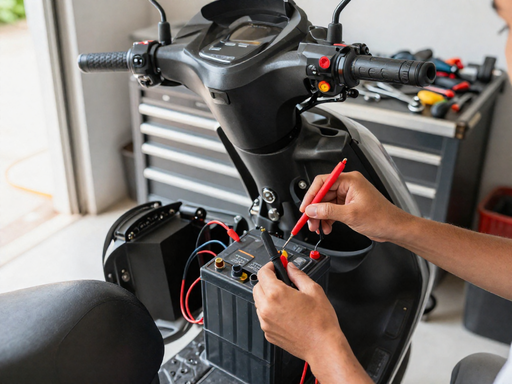
A dead or weak battery is the most common reason your scooter won’t start, and Malaysia’s heat can accelerate battery drain even when the bike is parked. If you accidentally left the lights on or haven’t ridden in a while, the battery may have discharged.
When you press the starter, listen for a rapid clicking sound — that’s a telltale sign of insufficient voltage. Next, turn on the ignition and test the horn and headlight. If the horn sounds weak or the headlight is dim, the battery is almost certainly the culprit.
If your scooter has a kick-starter, use it to get going and recharge the battery on your ride. For models without one, a portable jump starter pack is a safe, convenient way to revive the battery without needing another vehicle. When jump-starting, always connect the positive terminals first, then the negative to a grounded metal part.
Finally, check the battery terminals for white or greenish corrosion and ensure the connections are tight. Loose or corroded terminals can mimic a dead battery and are simple to clean with a wire brush or sandpaper. If the battery repeatedly goes flat, have it tested at a workshop — it may be time for a replacement that suits our tropical climate.
2. Check the Fuel Level and Quality
A scooter that won't start often has a simple fuel issue, even if the gauge shows there's enough petrol. First, be sure to check the tank physically. Many Malaysian scooters have a reserve setting—either a manual petcock or a digital reserve—so switch to reserve and try again if it's not already on.
If your scooter has been sitting for more than a few weeks, old fuel can lose its volatility and may gum up the carburettor or injectors. Stale petrol often smells different, and draining the tank to replace it with fresh RON95 or RON97 can solve hard-starting problems.
For fuel-injected models, turn the key to "on" and listen carefully—you should hear a soft whirring noise as the fuel pump primes for a couple of seconds. That sound tells you the pump is working and building pressure. No sound? The pump, fuse, or relay might be faulty, and you'll likely need a mechanic.
If your scooter uses a carburettor, you can try a small trick: open the throttle just a bit while pressing the starter button. This lets in extra air and can help a flooded or stubborn engine catch. Don't twist it wide open, though—just a gentle turn is enough.
3. Check the Kill Switch and Side Stand
It’s surprisingly easy to accidentally bump the kill switch, especially when manoeuvring your scooter in tight parking spots or after a quick stop. Double-check that the kill switch is firmly in the 'Run' position. This red toggle is usually located on the right handlebar, and even a slight nudge can cut the ignition.
Next, look at your side stand. Most modern scooters in Malaysia have a safety feature that prevents the engine from starting if the side stand is down while the scooter is in gear. Even if yours is an automatic transmission, the sensor may still engage. Try lifting the side stand fully, making sure it clicks into its upright position. If the problem persists, the side stand switch might be faulty or disconnected. Inspect the switch near the stand hinge for any visible damage, loose wires, or corrosion caused by our tropical humidity and occasional floods. Sometimes a quick clean or tightening of the connector is all it takes. As a temporary fix, you can attempt to start the scooter with the stand up, but have it checked at a trusted workshop soon to avoid being stranded.
4. Inspect the Spark Plug
Over time, spark plugs can become fouled with carbon deposits, especially if your scooter is used for frequent short trips where the engine doesn’t fully warm up. This buildup can prevent the spark needed for ignition. To inspect the spark plug, first locate it—usually under a small cover on the engine. Remove the plug with a spark plug socket. Look at the tip: if it’s covered in black, sooty carbon or wet with fuel, it needs attention. You can carefully clean it with a wire brush, but if the fouling is heavy or the electrode looks worn, it’s best to replace it. Next, check the gap between the electrodes using a feeler gauge; the correct specification is usually in your owner’s manual. A gap that’s too wide or too narrow can cause weak spark. Finally, test for spark: reconnect the plug wire, hold the plug by its insulated boot, and press the metal threading firmly against an unpainted engine bolt or fin to ground it. Crank the engine and look for a strong, bluish spark. A faint or absent spark suggests a bad plug or deeper electrical trouble, so replacing the plug is a logical next step.
5. Examine the Starter Motor and Fuses
When the battery is in good shape and fuel is flowing, but your scooter still refuses to crank—or you hear just a single click when pressing the starter—the problem often lies with the starter motor, its solenoid, or a blown fuse.
Start by listening carefully. A single, crisp click usually points to a faulty starter solenoid or a stuck motor. Next, locate the fuse box (commonly under the seat or near the battery on most Malaysian scooters). Pull out the fuses related to the ignition or starter circuit and look for a broken metal strip inside. Replace any blown fuse with one of the exact same rating—never substitute a higher amp fuse.
If fuses are fine, try this temporary fix: with the ignition off, gently tap the body of the starter motor with a wrench handle or a rubber mallet. Sometimes the internal solenoid plunger gets jammed, and a light tap can free it. This is a classic roadside trick, but if it works, treat it as a sign that the starter is on its way out and plan for a proper repair.
Finally, inspect the wiring connections at the starter motor and solenoid. Look for loose terminals, frayed insulation, or greenish corrosion—common in our humid climate. Clean corrosion with a wire brush and tighten connections firmly. If everything looks clean and tight, but the problem persists, the starter motor itself may need professional testing or replacement.
6. Evaluate the Ignition System and ECU
Modern scooters rely on electronic controls, and a fault in the ignition system or ECU (engine control unit) can leave you stranded. Start by turning on the ignition and checking for any error codes on your dashboard. Many scooters will flash a check-engine light or display a specific pattern if there's an electrical fault. Refer to your owner’s manual to interpret the codes.
If your scooter uses a key transponder (immobiliser), ensure the key is recognised. A red blinking key symbol on the dash often indicates the immobiliser isn’t reading the chip inside the key. Try your spare key; if both fail, the immobiliser antenna ring or the ECU might need attention.
Water is a common culprit for sudden no-start conditions—especially after washing your bike or riding through a heavy rainstorm. Moisture can seep into the ignition coil, spark plug cap, or ECU connectors. If you suspect dampness, let the scooter dry out in a covered area for a few hours or gently blow-dry the electrical connectors with a hairdryer on a cool setting. Avoid using high heat, as it can damage components.
If you’ve exhausted these checks and the scooter still won’t start, it’s time for a professional diagnostic scan. A mechanic with the right tool can read fault codes from the ECU to pinpoint issues like a faulty crank position sensor or ignition coil. Many scooter workshops in Malaysia have diagnostic equipment for brands like Honda, Yamaha, and SYM, so don’t hesitate to get help.
When to Seek Professional Help
If you’ve worked through the previous checks and your scooter still refuses to start, it’s wise to step back and let a trained mechanic take over. Some problems require specialised tools and experience—especially when they involve internal engine components or complex electronics.
Pay attention to unusual symptoms. Grinding or metallic scraping sounds when you try to start could point to serious starter motor or engine damage. A lack of compression (where the engine spins over easily with no resistance) might mean a valve or piston issue. These aren’t typical DIY fixes and can worsen with continued attempts.
Electrical gremlins can be the hardest to trace. Modern scooters rely on sensors, ECUs, and wiring harnesses that demand careful diagnosis. If you suspect a major fault in the ignition system or you’ve already replaced fuses without success, it’s safer to avoid poking around. Never attempt complex electrical repairs unless you have the right knowledge and tools—mistakes can lead to shorts, fires, or irreversible damage.
In Malaysia, most towns have experienced scooter workshops familiar with common models like Yamaha, Honda, and Vespa. A quick inspection by a pro often saves time and money compared to guessing. Trust your instincts: if something feels beyond your comfort zone, calling a mechanic is the smartest next step.
FAQ
Why does my scooter only start sometimes?
Intermittent starting often points to a loose battery connection, a failing ignition switch, or a dirty carburetor. Check that the battery terminals are tight and corrosion-free, then inspect the spark plug and fuel system for inconsistent performance.
Can a bad spark plug prevent my scooter from starting?
Yes, a worn or fouled spark plug is a common cause of a no-start because it cannot produce a strong enough spark. Inspect the plug for black deposits or damage, and replace it with the correct type and gap for your scooter.
How often should I check my scooter battery in Malaysia's climate?
In Malaysia's heat and humidity, battery fluid evaporates quickly and terminals corrode faster, so a monthly check is wise. Clean any corrosion, top up distilled water if it’s a serviceable battery, and ensure the resting voltage is above 12.4V.
What should I do if my scooter won't start after sitting for a long time?
Start by recharging or replacing the battery, as prolonged storage drains it. Then drain the old fuel from the tank and carburetor to avoid clogging from stale petrol, and try kick-starting a few times with the throttle slightly open to clear the system.